Double-Slit Experiment (#158)
Light is a fascinating thing in our universe. We perceive it as color, warmth and vision. Yet it does things one may not expect it to do. One of the experiments that called for a better physical model of light was the double slit experiment. In this experiment, a laser is shone through two closely adjacent slits and projected on the screen behind. Using old physical models, one would expect to see one or maybe two specs of light on the screen, when in reality there appear alternating dark and bright spots.
To explain why this seemingly strange phenomenon is occurring, one can either see light as photons and comprehend that a photon presumably follows every possible path there is in the entire universe and then — through it being observed — randomly chooses one path and thus creates stripes (according to the theory of quantum mechanics) or one can see light as simply being a wave.
For more information on the double-slit experiment, I refer to this Wikipedia entry.
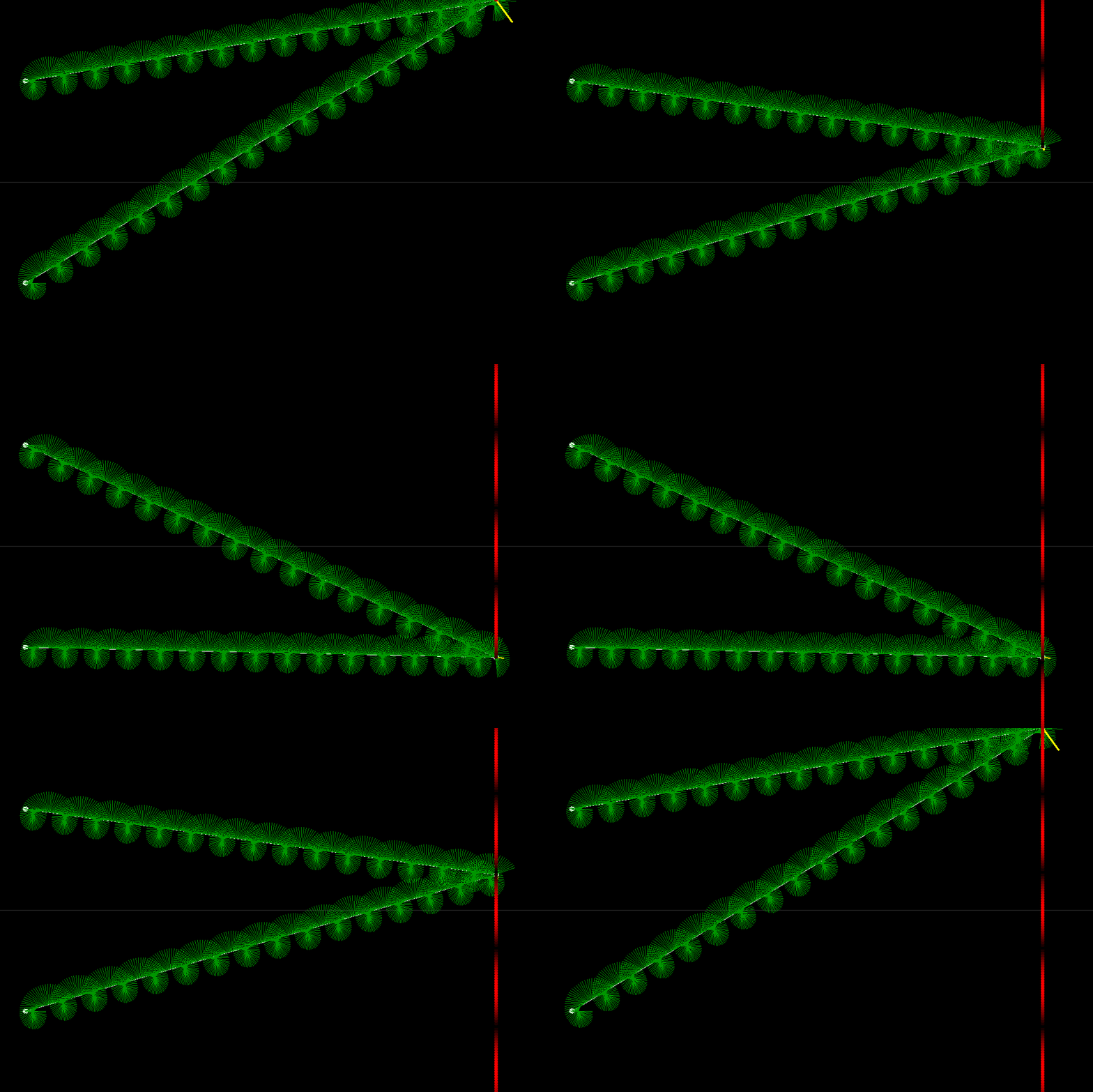
The animation shown below describes light as a wave. The green vectors represent the light wave’s phase at the points on the light beam, the yellow vector represents the addition of both of the slit’s light beam’s phase when hitting the screen and the red dots at the screen represent the light’s brightness at that point (defined by the yellow vector’s length).
To create the animation, Python and a Python module called PIL were used to create single frames which were then stitched together by ImageMagick to create an animated gif.
Source code: double-slit-experiment.gif